

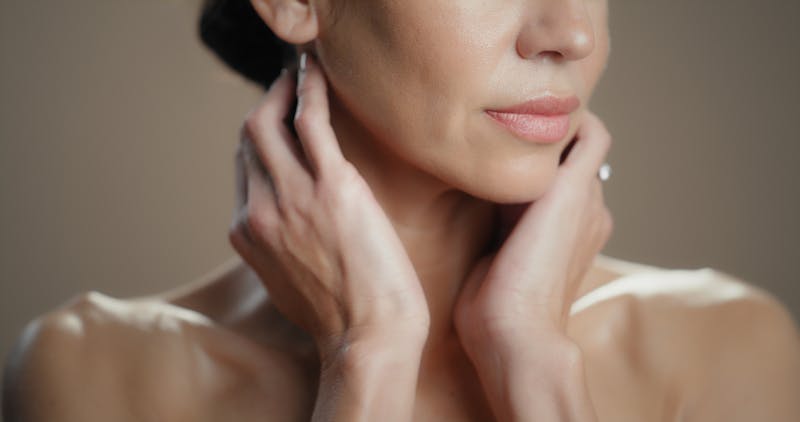
The ideal outcome of a facelift is a natural look that resembles a more rested, youthful version of yourself. Achieving this involves more than simple tightening; modern techniques focus on restoring facial structure by repositioning deeper tissues for a naturally draped appearance.
Dr. Mansher Singh, a Harvard- and Johns Hopkins-trained, triple board-certified plastic surgeon, exemplifies this approach to facial rejuvenation. He emphasizes the deeper foundations of aging, focusing on the muscle and support layers to improve jowls, contours, and neck laxity while preserving each face's unique features.
Through patient-centered planning and precise technique, Dr. Singh delivers facelift results that appear timeless and authentically you. This blog will delve deeper into his methods and the potential outcomes for you.
Consider Anatomy Over Age
A facelift is designed to improve common age-related changes such as laxity in the lower face and neck, jowling, and softened definition along the jawline. As such, facelifts should be performed based on your anatomy and your aging pattern, which includes:
- How your tissues have changed
- Where support has shifted
- Where volume has deflated or descended
- What’s driving the “tired” or “heavy” look you see
Dr. Singh’s approach: Identify what’s structural vs. superficial, then treat the structure first; structure is what creates a result that looks natural in motion, not just in photos.
Avoid Lifting the Wrong Layer
One of the most common misconceptions about facelifts is that they simply tighten the skin. In reality, facial aging begins much deeper—within the face’s structural support system, most notably the SMAS (superficial musculoaponeurotic system).
The SMAS is a fibromuscular layer beneath the skin and fat, closely connected to the muscles of facial expression. It serves as the face’s internal framework, helping maintain youthful contours of the cheeks, jawline, and neck.
With time, this support layer gradually descends and loosens, leading to visible signs of aging, such as:
- Jowls and sagging along the jawline
- Deepened folds and shadows
- Loss of facial definition in the lower face and neck
When the SMAS shifts downward, the skin follows. Tightening skin alone cannot correct this structural descent and is what historically led to facelifts that appeared tight or unnatural.
Modern facelift surgery instead focuses on repositioning and supporting the SMAS to restore the face’s internal architecture. This approach allows surgeons to:
- Lift and redefine the deeper tissues where aging truly occurs
- Minimize tension on the skin
- Redrape the skin smoothly and naturally over a restored foundation
Dr. Singh’s approach: Choose the plane and vector of lift that best match your anatomy so the improvement is elegant, not noticeable. Dr. Mansher Singh’s mastery of facial anatomy and advanced SMAS-based techniques allows him to customize how—and where—this support layer is addressed for each patient.
Meticulous Technique Selection
Deep Plane Facelift: Powerful Lift Where It Counts
- Deep-plane techniques target deeper tissue layers for a more natural, seamless rejuvenation of the midface, jawline, and neck
- Dr. Singh selects this technique for patients requiring significant rejuvenation of the lower and midface
- Lifting the deeper support provides a more natural "restoration" compared to just surface tightening
Vertical-Style Lifting: A More Natural Direction
- Some patients benefit from a lift that prioritizes vertical restoration—especially when cheek descent and facial angles are key concerns
- Dr. Singh uses it to recreate youthful proportions while keeping the result soft and believable
Mini Facelift: Smaller Change, Shorter Recovery
- For early jowling or mild laxity, a mini facelift can be a thoughtful option
- Dr. Singh prefers this technique for patients who want a refined improvement without over-treating what doesn’t need correction
The Role of the Awake Facelift in Natural-Looking Results
One of the defining elements of Dr. Mansher Singh’s approach is his preference, when appropriate, for the Awake Facelift—performed under local anesthesia with oral sedation rather than general anesthesia.
By keeping patients comfortably awake and breathing naturally, Dr. Singh can operate with exceptional control and precision in the deeper layers of the face.
This technique offers several distinct advantages:
- Refined tissue repositioning without the physiologic stress of general anesthesia
- A more controlled surgical environment, which is especially critical when working near delicate facial nerves and blood vessels
- Clearer tissue planes and reduced intraoperative swelling, allowing for meticulous contour remodeling
From an aesthetic standpoint, the Awake Facelift aligns seamlessly with Dr. Singh’s philosophy of restraint and structural restoration. Because the deeper tissues are repositioned with precision and minimal trauma, the skin can be gently redraped over a restored foundation.
Equally important is the recovery experience. Patients often report:
- Less post-operative grogginess and nausea
- A smoother, more comfortable early recovery
- Reduced overall disruption to daily life
The Dr. Singh Method: Guiding You Through Your Transformative Journey With Utmost Honesty and Integrity
Dr. Mansher Singh’s approach reflects the highest standards of modern facial rejuvenation. His elite training at Harvard and Johns Hopkins, rare triple board certification, and focus on advanced SMAS-based and deep-plane techniques allow him to address facial aging at its foundation.
If you are considering a facelift and want results that look elegant, natural, and unmistakably you, a consultation with Dr. Singh is the first step. During this collaborative, unhurried visit, he will evaluate your facial structure, discuss your concerns, and design a customized surgical plan focused on timeless results and lasting confidence.
To learn how Dr. Singh approaches natural-looking facelift results, schedule your private consultation today.