

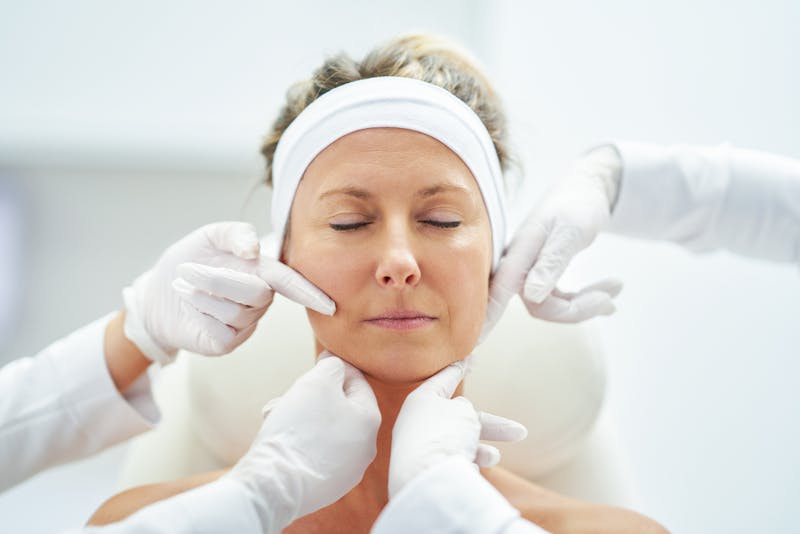
Dr. Singh's preference for performing the deep plane facelift under local anesthesia, his signature Awake Facelift technique, means patients experience less post-operative grogginess and tend to begin recovering more comfortably from day one.
Weeks Two Through Four: When Does It Start to Turn Around?
This is the phase where recovery meaningfully shifts. Bruising fades, swelling subsides, and the early results of the surgery begin to emerge. Many patients feel comfortable returning to work and light social settings by the end of week two.
Key milestones during weeks two through four include:
- Bruising: Largely resolved in most patients by the end of week two.
- Swelling: Noticeably reduced, though mild puffiness may linger in certain areas.
- Energy levels: Returning steadily as the body continues to heal.
- Sutures: Typically removed within seven to ten days of surgery.
- Confidence: Most patients feel comfortable being seen by friends and family.
Months One Through Three: The Refinement Phase
By the one-month mark, most patients are genuinely pleased with what they see — and the results continue to improve. Residual swelling resolves, tissues settle, and the full artistry of the deep plane technique becomes increasingly visible.
Between months one and three, patients typically notice:
- Facial contour: The jawline, cheeks, and neck look more defined and natural with each passing week.
- Skin texture: Continues to improve as deeper healing progresses beneath the surface.
- Tightness: Any residual sensation eases considerably during this phase.
- Scarring: Incision lines continue to fade and blend into the natural contours of the hairline and ears.
- Overall appearance: Most patients feel fully like themselves — only more rested and refreshed.
When Are Results Considered Final?
Full results from a deep plane facelift are typically visible at the six-month mark, with subtle refinements continuing for up to one year. Longevity is one of Most patients look like a refreshed, natural version of themselves within three to four weeks after a deep plane facelift. Bruising and swelling peak early and fade quickly. Final results, however, continue to be refined for up to six months to a year. The timeline varies by patient — but the trajectory is consistent: steady, visible improvement from week one onward.
Dr. Mansher Singh, MD, is a triple board-certified plastic and facial plastic surgeon trained at Harvard Medical School and Johns Hopkins, with over 1,200 five-star reviews and a reputation for delivering natural, long-lasting facial rejuvenation.
In this blog, we will discuss what the deep plane facelift recovery timeline looks like week by week, what factors influence healing, and how Dr. Singh's hands-on, concierge approach supports patients every step of the way.
What Happens in the First Week After Surgery?
The first week is the most intense part of recovery, and the least representative of your final results. Swelling and bruising are at their peak, which is completely normal and expected. According to the American Society of Plastic Surgeons, these effects typically begin resolving within one to two weeks after facelift surgery.
During week one, patients commonly experience:
- Swelling and bruising: Most concentrated around the jawline, cheeks, and neck.
- Mild discomfort: Effectively managed with prescribed medication.
- Drainage tubes: May be in place for the first day or two to minimize fluid buildup.
- Restricted activity: Rest is essential; strenuous movement should be avoided entirely.
- Frequent check-ins: Dr. Singh personally contacts each patient throughout this period, sharing his cell number so help is always within reach.
this technique's greatest strengths. A study published in the Aesthetic Surgery Journal found that deep plane facelifts consistently demonstrate superior long-term outcomes compared to more superficial techniques — with results lasting a decade or longer.
Factors that influence how quickly and fully results develop include:
- Age and skin quality: More elastic skin tends to heal faster and respond more readily.
- Lifestyle habits: Non-smokers heal more efficiently, and consistent sun protection preserves results.
- Procedure combinations: Adding complementary treatments like eyelid surgery or a brow lift may extend initial recovery slightly but enhance the overall outcome.
- Post-operative care: Following Dr. Singh's detailed recovery instructions closely makes a measurable difference.
- Individual healing variation: Every patient's body moves through recovery on its own timeline.
What Can You Do to Support a Smooth Recovery?
Recovery isn't passive. Patients who are proactive about aftercare consistently see better, faster results. The Mayo Clinic recommends keeping the head elevated, avoiding strenuous activity, and protecting incision sites from sun exposure as core components of post-facelift recovery.
Steps that support optimal healing include:
- Head elevation: Sleeping with the head elevated reduces swelling more quickly.
- Sun protection: SPF and physical coverage protect healing skin and help incisions fade faster.
- Hydration and nutrition: Supporting the body from the inside accelerates cellular repair.
- Avoiding smoking: Smoking significantly impairs circulation and delays healing at every stage.
- Staying in contact with Dr. Singh: Every patient has direct access to his personal cell number throughout the recovery process.
Ready to See Yourself on the Other Side? Dr. Singh Can Help.
Understanding the recovery timeline is one of the most important steps in deciding whether a deep plane facelift is right for you. Knowing what to expect and trusting who's guiding you through it makes all the difference.
Whether you're weeks away from feeling ready or still in the early research phase, a consultation with Dr. Singh is the clearest path forward. He will walk you through the entire process with the honesty, precision, and personalized attention his patients consistently count on. Schedule your consultation today.